
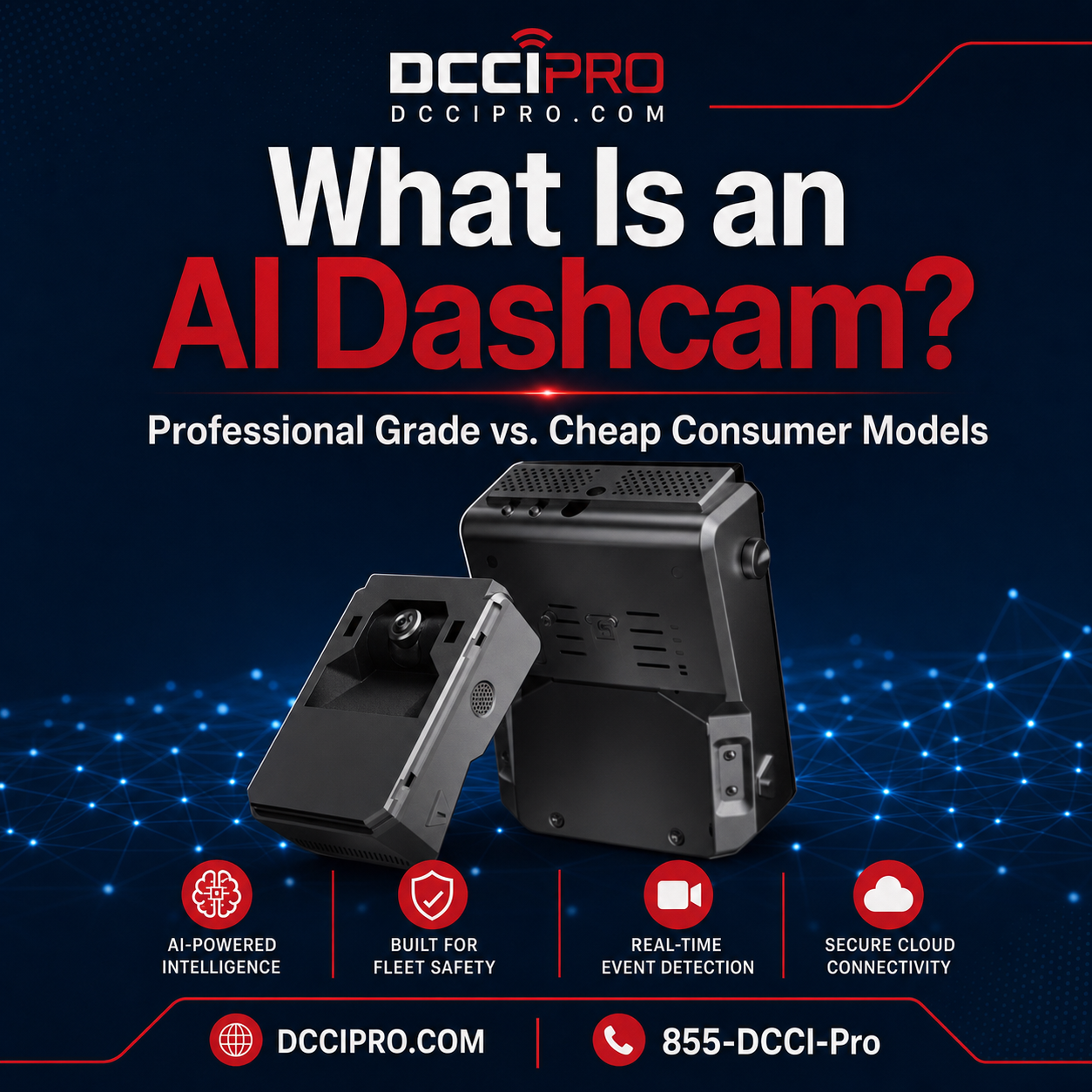
What Is an AI Dashcam and How Does It Work?

Quick Summary
- Cloud Storage vs. SD Cards: AI dashcams instantly stream crash footage to the cloud, ensuring video is never lost to a damaged SD card.
- Real-Time Coaching: The AI detects infractions like tailgating or cell phone use and verbally coaches the driver to correct behavior immediately, dramatically reducing accidents.
- Driver Protection: In-cab cameras act as an impartial witness to exonerate drivers against false claims of distracted driving.
- Insurance Savings: Integrated telematics and AI dashcams can improve your CAB score, helping you secure significant discounts from commercial insurance carriers.
If you manage a fleet of vehicles, you already know the risks your drivers face every day. From distracted drivers cutting off your trucks to false claims made after an accident, the road is a liability.
For years, basic dashcams were the only way to capture what happened. But today, the technology has fundamentally changed. AI dashcams aren't just recording the road—they are actively preventing accidents and protecting your business in real time.
At DCCI, we integrate AI dashcams and telematics (like our ClearPath GPS solutions) into fleets across Central Alabama. Here is exactly what an AI dashcam is, how it works, and why it is the best investment you can make for your drivers and your bottom line.
AI Dashcams vs. Cheap Consumer Cameras
When most people hear "dashcam," they picture a $50 camera from Best Buy that records video to a local SD card.
A true AI dashcam is a completely different tool. While consumer-grade models only record to an SD card—which often degrades over time or gets destroyed in a crash—an enterprise AI dashcam streams critical incident video directly to the cloud.
If one of your trucks is involved in a collision, the video is backed up instantly. You don’t have to hunt down the physical camera or hope the SD card survived the impact; the footage is secure and available for download within moments.
Real-Time Coaching: Stopping Accidents Before They Happen
The biggest difference between a consumer camera and an AI dashcam is the "Artificial Intelligence" itself. The camera doesn't just record; it actively monitors driving behavior in real time to coach the driver.
The AI looks for infractions like:
- Tailgating and aggressive driving
- Not wearing a seatbelt
- Cell phone usage and distracted driving
- Smoking, eating, or drinking while driving
When the camera detects one of these behaviors, it alerts the driver inside the cab with a chirp and a voice command. For example, it will explicitly say, "Harsh braking detected," or remind them to increase their following distance.
When drivers are made aware of these infractions in real time, they naturally correct the behavior. We typically see a massive reduction in infractions within 30 days. A driver might have a poor driving score on Day 1, but by Day 30, they are a significantly safer driver—and those good habits usually carry over into their personal lives, too.
The In-Cab Camera: Protecting the Driver
A common misconception among drivers is that the inward-facing camera is a "Big Brother" tool used to spy on them. The truth is exactly the opposite: the in-cab camera exists to protect the driver.
The road-facing camera only tells part of the story. If a truck is involved in an accident and a witness falsely claims your driver was texting or distracted, the road camera cannot disprove it. The in-cab camera can.
We have had numerous cases where a driver was accused of being at fault, but the inward-facing camera proved they were attentive, wearing their seatbelt, and operating the vehicle safely—completely exonerating them. Furthermore, 98% of dashcam footage is never reviewed. Unless there is an incident or a severe AI trigger, nobody is watching. The camera is simply an impartial witness waiting to defend your team.
Instant Notifications and Driver-Marked Footage
The dashcam records from the moment a driver starts their shift until the shift ends.
During a severe impact, the camera automatically detects the collision, logs the speed and telemetry data, and instantly reports the crash to the fleet manager while streaming the video to the cloud.
But it also gives the driver control. If a driver gets aggressively cut off on the highway, they can press a physical button on the camera to "mark" that specific moment. This automatically sends that video clip to the supervisor, allowing the driver to report dangerous road conditions or reckless drivers proactively.
The DCCI Difference: Your Outsourced Video Team
Many fleets use one company for their two-way radios and a completely different company for their dashcams. At DCCI, we integrate both—and that creates a massive advantage for fleet managers.
Because we operate both your radio network and your ClearPath GPS telematics, we act as a single point of contact. If your truck is involved in an accident, you don't have to log into a complicated software portal or call a random 1-800 number. You call DCCI.
We log into your account, pull the exact video footage of the crash from the cloud, and text it directly to the fleet manager within moments.
This integration also provides ultimate visibility. If a dispatcher gets a collision alert on the telematics map, they can check the live-view dashcam to see the truck is empty. Because the driver is carrying one of our Push-to-Talk over Cellular (PoC) radios, the dispatcher can check the radio's GPS, see the driver is safely inside a nearby building, and radio them instantly to tell them their parked truck was hit.
DCCI is essentially the highly-trained employee you never have to put on payroll. We are always at the ready when something happens.
The Bottom Line: Telematics Can Pay You Back
An AI dashcam is the employee every company wishes they had. It is always there, it is an impartial witness, it never calls in sick, and it wants the absolute best for your organization at all times.
More importantly, it can actually put money back into your business. The AI coaching feature gets driving scores in line, reducing accidents and liability. At DCCI, we partner with insurance carriers and brokers through CAB score programs. When you use our telematics and AI video systems to prove your fleet is safe, insurance companies are often willing to provide massive discounts—sometimes enough to completely subsidize the cost of the system.
When is the last time you used a product or service that actually paid you real money?
Protect your drivers and your bottom line.
Contact DCCI today to learn how our ClearPath AI dashcam and telematics integration can transform your fleet.